Modernizing a Global Logistics Analytics Platform: Azure to Microsoft Fabric Migration
 0|
0| 0
0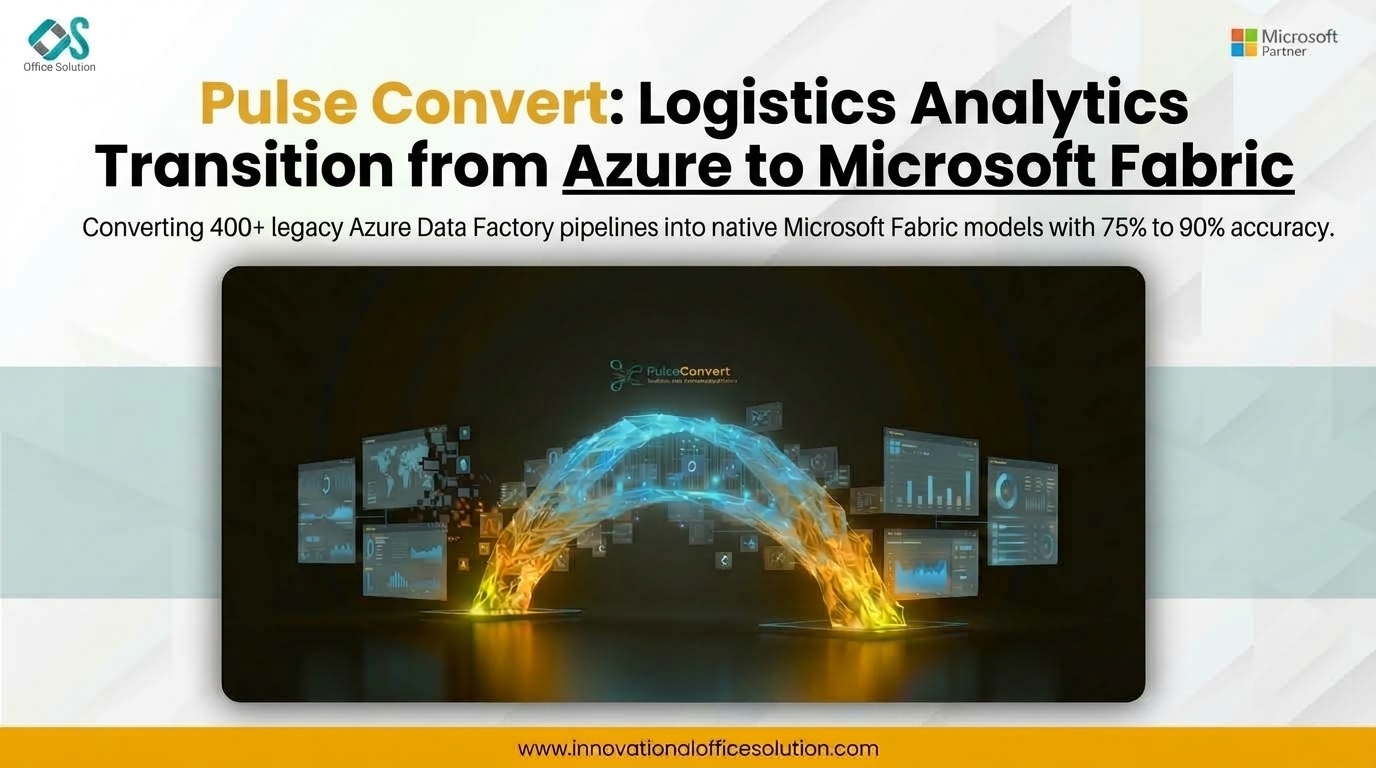
Table of Contents
Executive Summary and Client Background
A North American supply chain and logistics provider operated an extensive analytics infrastructure built on Azure PaaS components. Over six years of expansion, their architecture grew into a complex mesh of 14 Azure Data Factory (ADF) instances, 4 Azure Synapse Analytics workspaces, 8 Azure SQL Databases, and over 120 TB of unstructured and semi-structured data hosted across multiple Azure Data Lake Storage (ADLS) Gen2 accounts.
The operational overhead required to keep these disjointed environments synchronized was severe. Data engineers spent up to 35% of their sprint cycles managing linked services, monitoring pipeline failures across disparate resource groups, and tuning cross-region data egress. Furthermore, business analysts faced delays because Power BI reports relied on import-mode refresh schedules that took up to five hours every morning.
To eliminate infrastructure friction, reduce cloud spend, and achieve real-time reporting across global distribution centers, the organization chose to execute an Azure to Microsoft Fabric migration. The primary objective was transitioning from a multi-tenant PaaS setup to a unified SaaS analytics environment powered by OneLake and Fabric Capacity.
Architectural Challenges Pre-Migration
Before initiating the project, the client’s technical review panel identified three critical bottlenecks within the legacy Azure stack:
- Storage and Compute Fragmentation: Data resided in separate ADLS Gen2 accounts divided by region and department. Reading data across these silos required nested ADF copy activities, creating duplicate copies of the same transactional datasets.
- High Maintenance Overhead in ADF and Synapse: Managing integration runtimes, SQL Dedicated Pools, and serverless Spark clusters across multiple environments created a heavy administrative workload and high monthly operating costs.
- Data Refresh Delays: Standard import models in Power BI required scheduled refreshes that choked pipeline processing windows during peak morning hours, limiting real-time access to inventory metrics.
The Migration Strategy: Leveraging Pulse Convert
To tackle the scope of converting hundreds of legacy pipelines and database schemas, the implementation team deployed Pulse Convert, an automated code and workflow translation tool designed specifically for Fabric modernizations.
Rather than manually rebuilding pipelines and rewriting T-SQL scripts, the team used Pulse Convert to scan, parse, and translate legacy Azure assets into Fabric-native artifacts.
During the automated assessment phase, Pulse Convert analyzed 412 ADF pipelines, 1,200+ T-SQL stored procedures, and 85 PySpark notebooks. The tool achieved 83% automated code and pipeline translation accuracy, which fell squarely within its expected 75% to 90% operational benchmark. The remaining 17% involved custom C# script activities and niche external REST API connectors that required manual refactoring by senior data engineers.
Step-by-Step Implementation Roadmap
The modernization effort was completed across five structured phases over an 11-week period:
Phase 1: Assessment and Inventorying [Weeks 1-2]
The initial phase focused on cataloging all digital assets. The engineering team extracted meta-definitions for all 14 ADF instances, mapped dependency chains between Synapse pipelines, and reviewed database object usage across the 8 Azure SQL databases. Pulse Convert scanned the entire codebase to flag unsupported activities (such as custom SSIS executions) and calculated the estimated automated conversion success rate.
Phase 2: OneLake Architecture & Shortcuts Setup [Weeks 3-4]
Rather than performing a massive, high-risk data migration of the entire 120 TB storage layer, the team deployed OneLake shortcuts. By creating direct shortcuts from Microsoft Fabric to existing ADLS Gen2 containers, data became instantly accessible within Fabric Lakehouses without moving physical files or disrupting live operational systems.
Phase 3: Automated Pipeline Conversion via Pulse Convert [Weeks 5-7]
Using Pulse Convert, the team converted legacy ADF pipelines into Fabric Data Factory pipelines and Dataflows Gen2:
- Automated Logic Parsing: Pulse Convert converted native ADF activities, web calls, and lookup tasks into Fabric-compatible definitions.
- Refactoring Complex Code: The 83% automatically translated pipelines passed straight through to automated testing suites. The remaining 17% were manually converted to Python-based notebook tasks or standard Fabric Web Activities.
Phase 4: Data Warehouse Consolidation & DirectLake Optimization [Weeks 8-9]
Synapse Dedicated SQL Pools were consolidated into a unified Fabric Data Warehouse. The team updated existing schemas, adjusted T-SQL syntax where necessary, and shifted Power BI models from traditional Import Mode to DirectLake Mode. This allowed Power BI to read Parquet/Delta files directly from OneLake without requiring data ingestion or separate semantic model refreshes.
Phase 5: Testing, Governance, and Cutover [Weeks 10-11]
During validation, the team ran parallel runs comparing outputs from legacy Azure Synapse instances against the new Fabric environment. Once data parity was confirmed, security policies were centralized using Fabric's OneSecurity model, and production workloads were cut over to the new platform.
Business Impact and Operational Results
The shift from an unintegrated Azure PaaS stack to a streamlined Microsoft Fabric SaaS workspace delivered clear technical and financial improvements:
- Lower Infrastructure Costs: Consolidating individual Azure SQL, Synapse, and ADF costs into a single Fabric F64 Capacity model reduced monthly cloud compute costs by 31%.
- Faster Pipeline Deployment: Pulse Convert’s 83% translation accuracy cut manual engineering work by over 600 hours, allowing the team to finish the transition four weeks ahead of schedule.
- Eliminated Reporting Latency: Switching to DirectLake Mode reduced report load times from hours to under two seconds, giving executives real-time access to global logistics data.
- Simplified Platform Administration: Centralizing governance inside OneLake eliminated the need to maintain separate storage accounts, linked services, and custom access permissions.
Accelerate Azure to Microsoft Fabric Migration
Unify disparate ADF pipelines, Synapse pools, and ADLS storage into Microsoft Fabric with up to 90% automated conversion using Pulse Convert.


